Welcome back to another edition of Into The Kitchen With MMJ! Last time, we cooked a Thanksgiving Meal big enough to feed many hungry Sisters. Today, I will be creating another holiday meal, this time in celebration of Good Friday. The Good Friday meal is typically vegetarian or pescatarian, saving for the big feast on Easter Sunday. Following tradition, I picked recipes that you could find at a typical meatless meal.
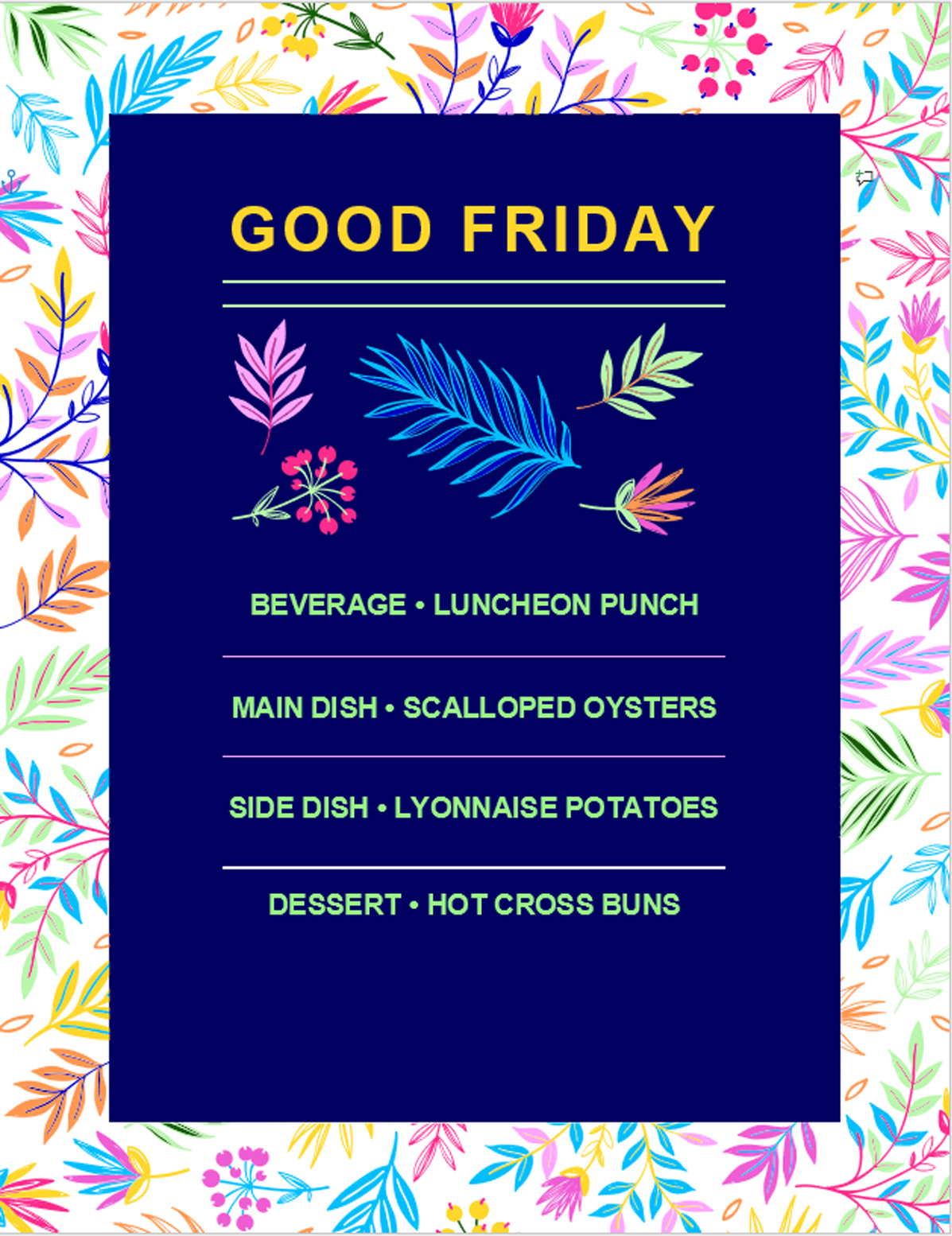
Join me as we make 4 dishes in observation of the Good Friday traditions. Below you can get a preview of our menu for today.

Luncheon Punch
What Did I Think?
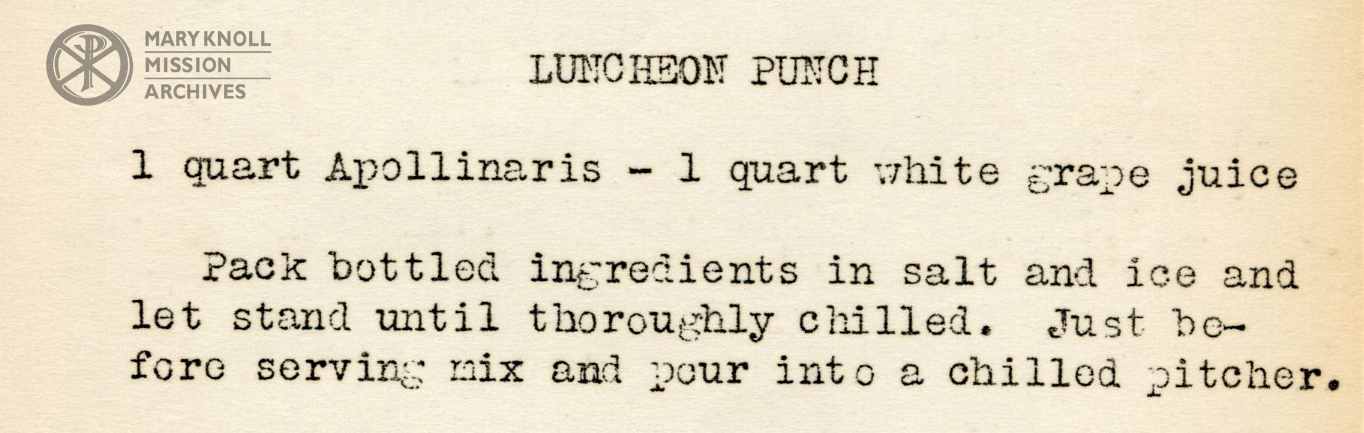
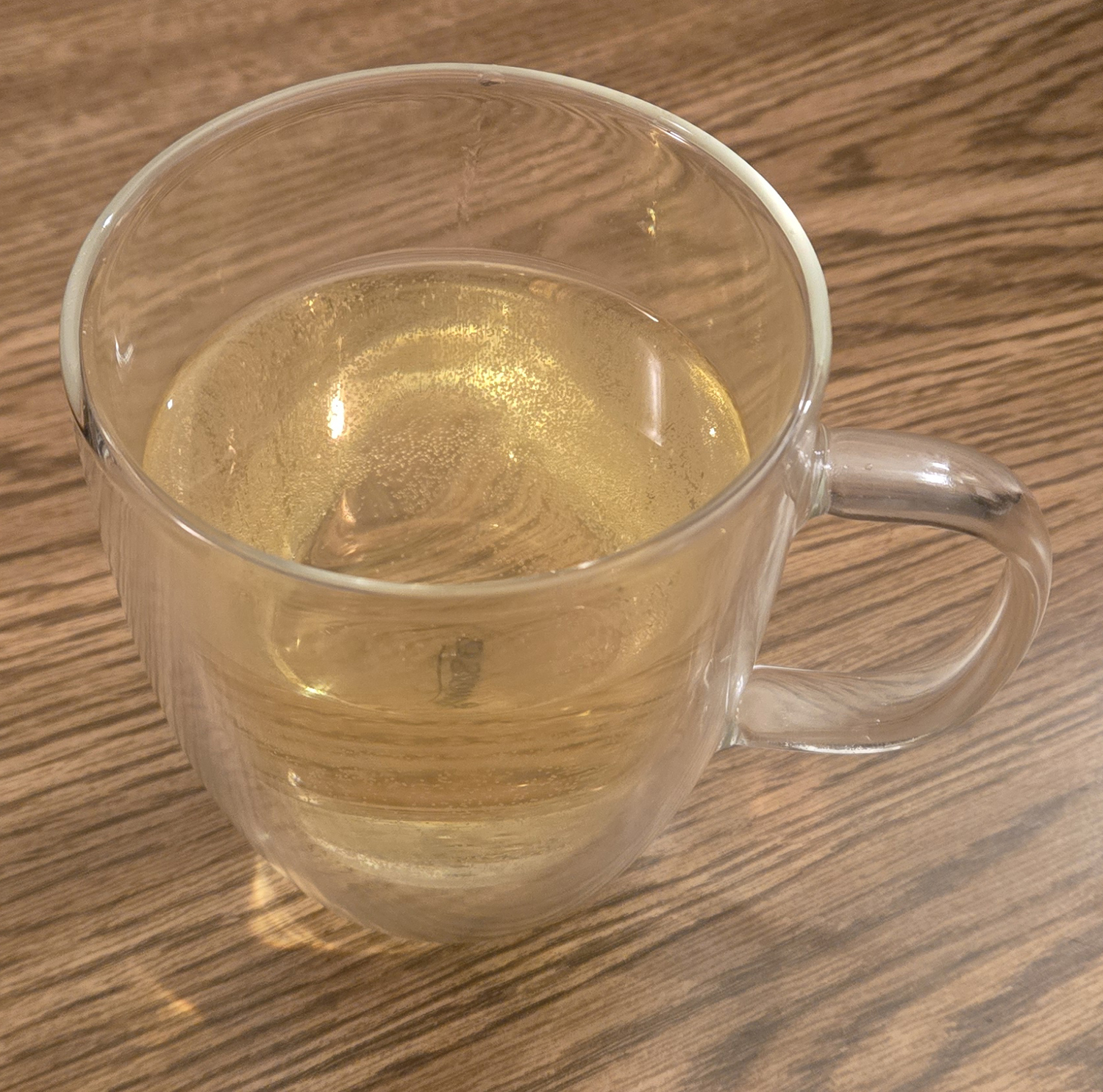
To start off our meal, lets make a Luncheon Punch to refresh and celebrate the day. If you ever had Sparkling Grape Juice (particularly Welch’s), this recipe would be quite familiar. The punch is not as sweet as the grocery store stuff, offering a light refreshment for our Good Friday Meal.
Chef’s Corner
This is one of the simplest recipes I ever made, just equal parts Apollinaris and Grape Juice. The Apollinaris gives the recipe a slight fizz and balances out the usual sweetness of grape juice. If you can’t get Apollinaris, any sparkling mineral water will do, such as San Pelligrino or Perrier.
Scalloped Oysters
What Did I Think?
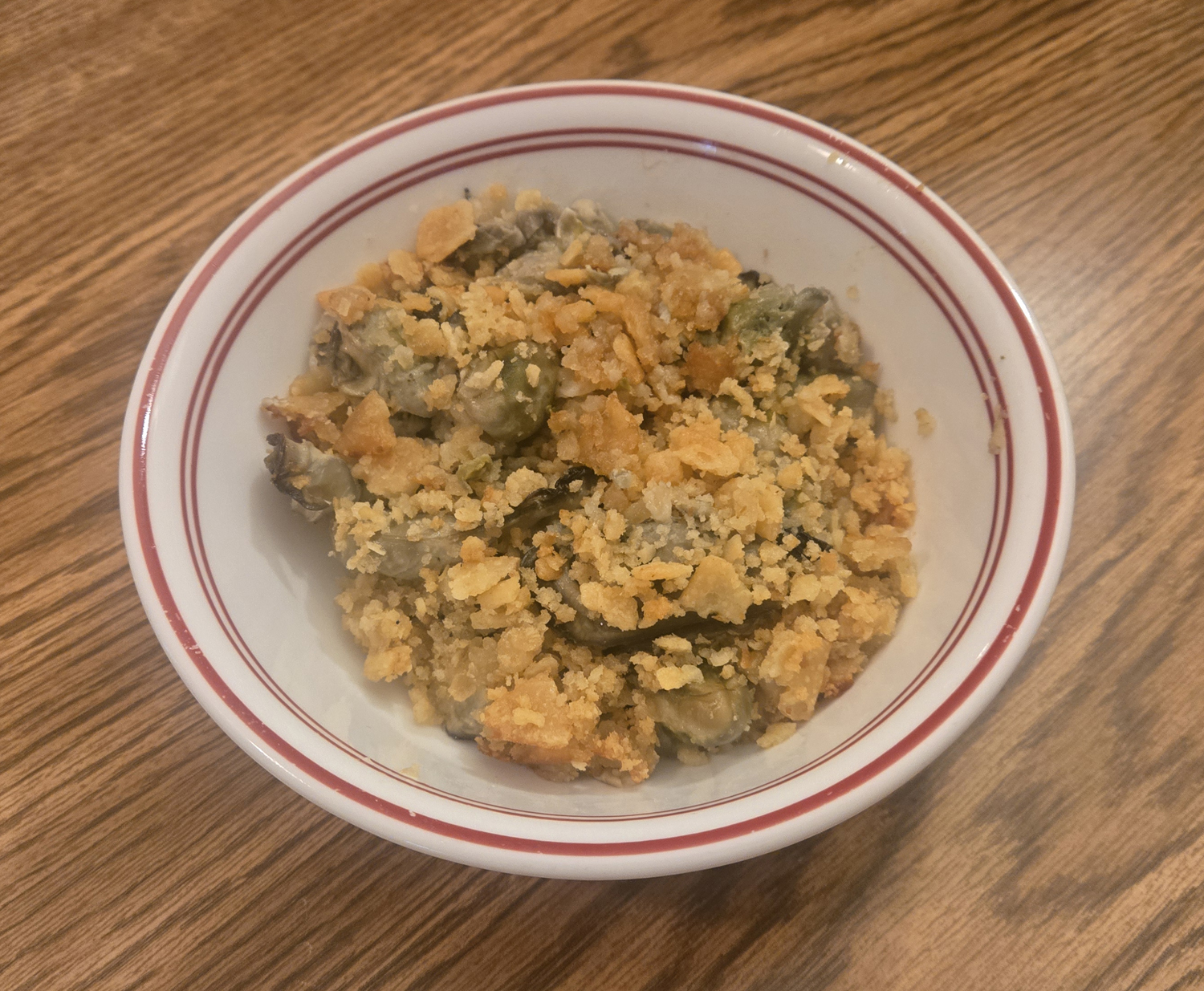
Personally, I do not eat much fish or seafood. I endeavored to search through MMJ’s Recipe Book for a recipe I might like. Amongst the recipes in her fish section, I came upon a unique recipe that I was unfamiliar with: Scalloped Oysters. I am a fan of oysters and it seemed like a unique dish, so I decided to give it a try.
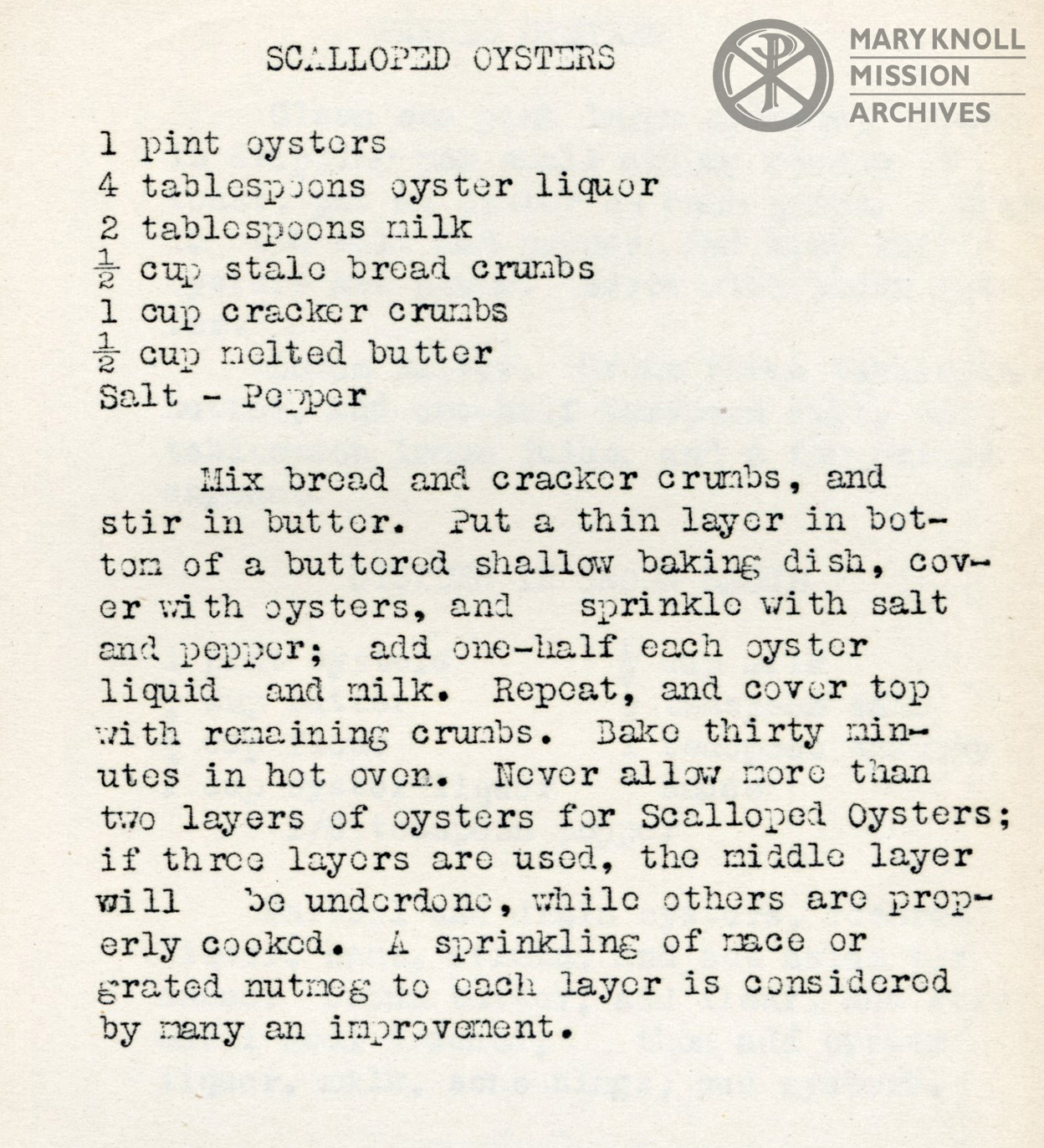
What surprised me about this dish was how much it kept together. There is no real binder for the liquid, so I thought the dish would be wet and soggy. However, the bread and cracker crumbs between the layered oysters kept everything together while top got crisp and brown. The oysters themselves were cooked through, but surprisingly not chewy. The flavor is fairly simple, tasting like oysters and not much else. If that suits your palette, please give the recipe a try.
Chef’s Corner
Fresh oysters are always best, but you’ll have to shuck quite a few to get enough for a pint (2 cups) of them. Instead, I used Canned Whole Oysters, which were actually quite hard to find. Certain stores do carry the Bumblebee brand, but more often you will find Smoked Oysters. I’m not sure how well they would cook, but using smoked oysters could add some flavor to an otherwise straight-forward dish.
There are other options one could use to amp up the flavor of this dish. I think some Old Bay would go a long way and match the typical flavor profile for oysters. Garlic, fresh herbs, and butter are all a great pairing with seafood. You could also make a spicy version with cayenne, tabasco, and fresh chiles. The best part of a basic recipe such as this is its flexibility, adjustable to your palette.
Lyonnaise Potatoes
What Did I Think?
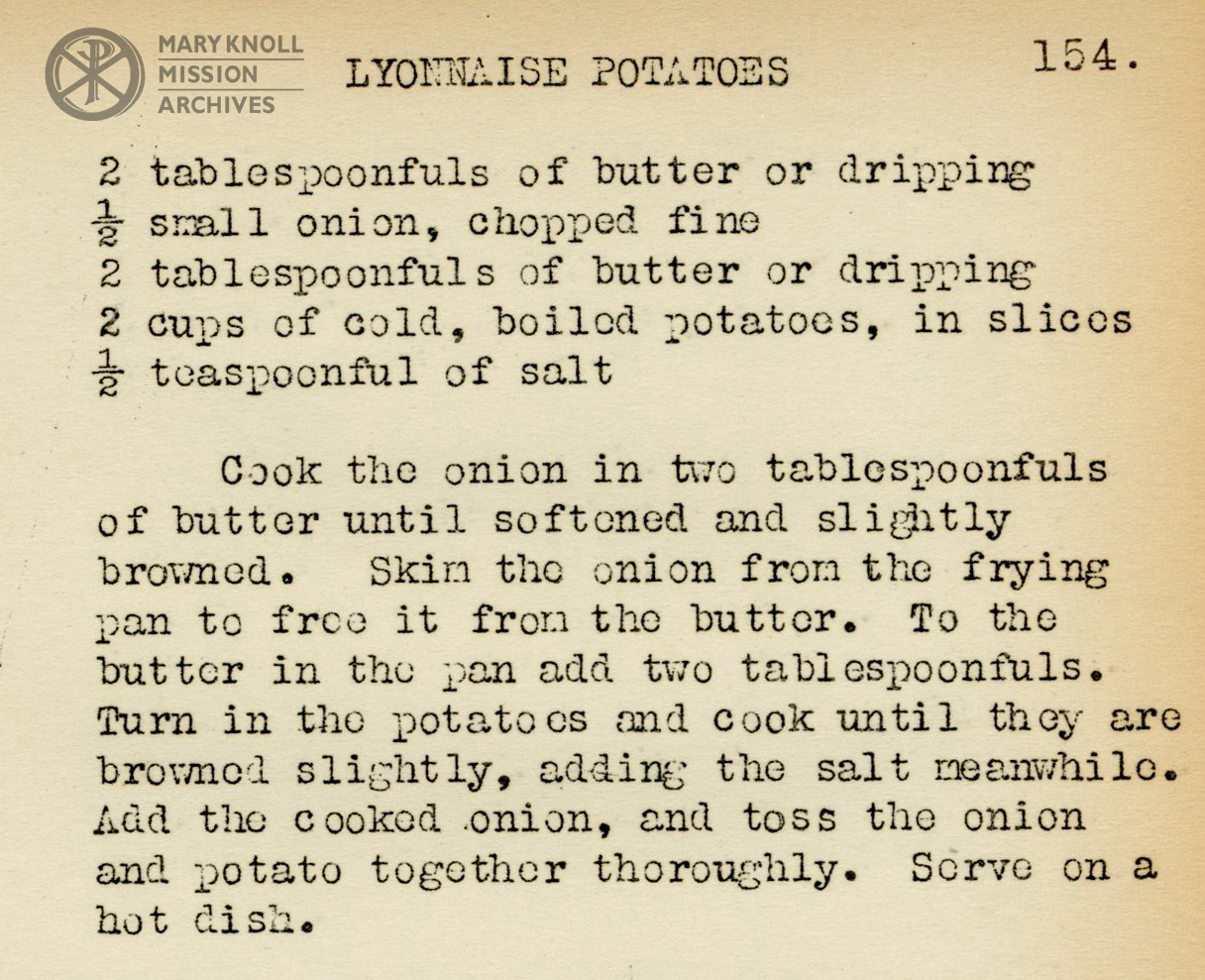
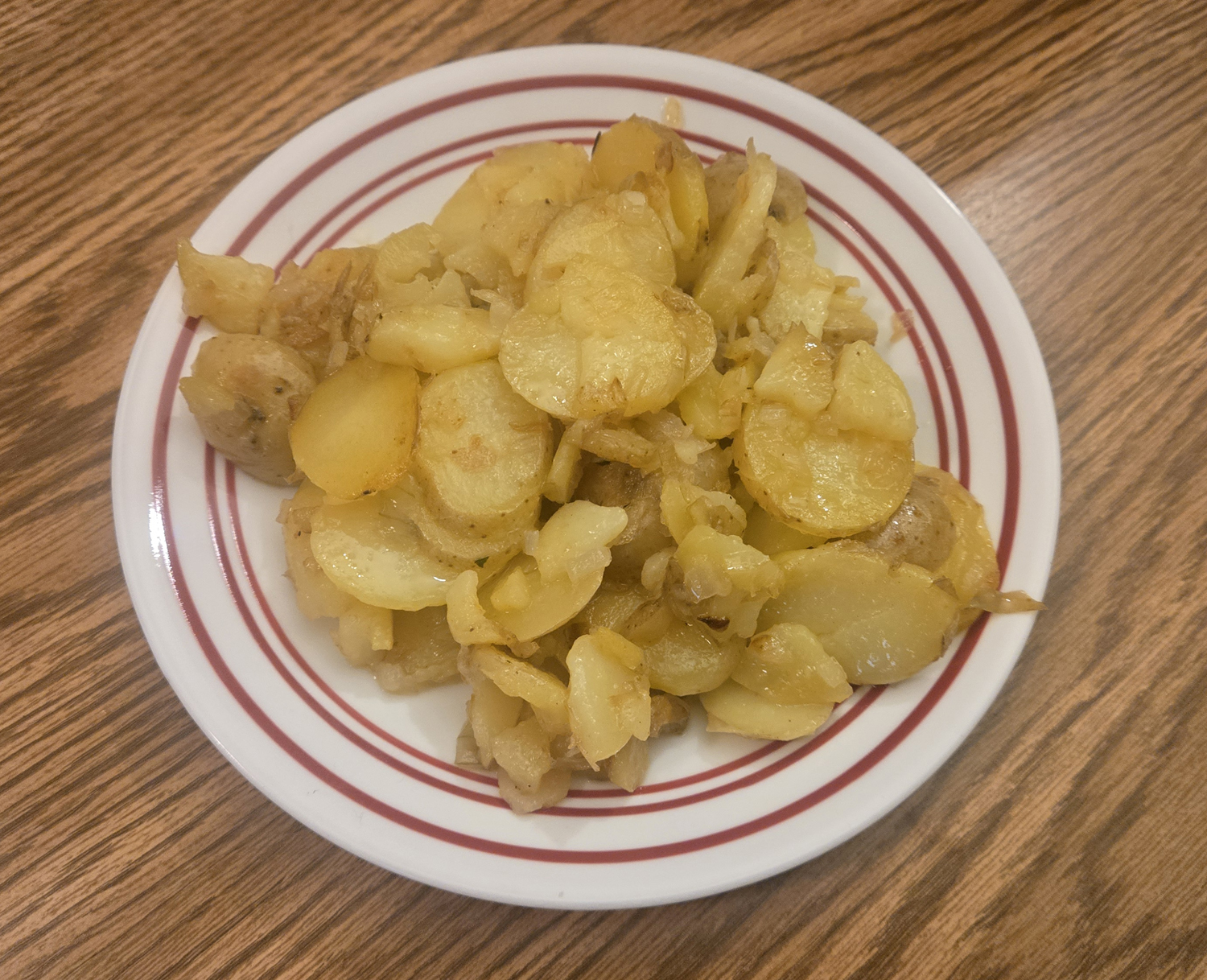
To go with our main, I searched for a side that felt a bit luxurious for our Good Friday Celebration. I landed on Lyonnaise Potatoes, which sounds appropriate for a special occasion. The dish simply consists of sliced potatoes and onions cooked in butter. Just like many other recipes in this series, the key to this dish is in its simplicity. Onions, Potatoes, and Butter all taste delicious indivdually, and together they elevate each other. The dish is particularly good if you brown and crisp the potatoes, adding some texture to the flavor.
Chef’s Corner
This is a classic French side dish, originating in the City of Lyon. It is known for a rich, savory flavor with contrasting textures from the soft onion and the crispy bits on the potatoes. It is important to pick the right potatoes, as you need enough starch to get the golden brown and crisp exterior. Typically the dish uses either Russet or Yukon Gold potatoes, and I prefer the latter due to the visual contrast between the yellow and brown. Also be careful to not overcook the potatoes. You’ll want them just barely tender, so the potatoes do not fall apart when sliced and cooked again.
Hot Cross Buns
Locating a Recipe
No Good Friday meal would be complete without Hot Cross Buns! However, MMJ’s Missioner Cookbook does not contain that particular recipe. There are a few roll recipes we could adapt, but I was looking for something a bit more authentic. Luckily, the Missioner cookbook is not the only place to search for recipes!
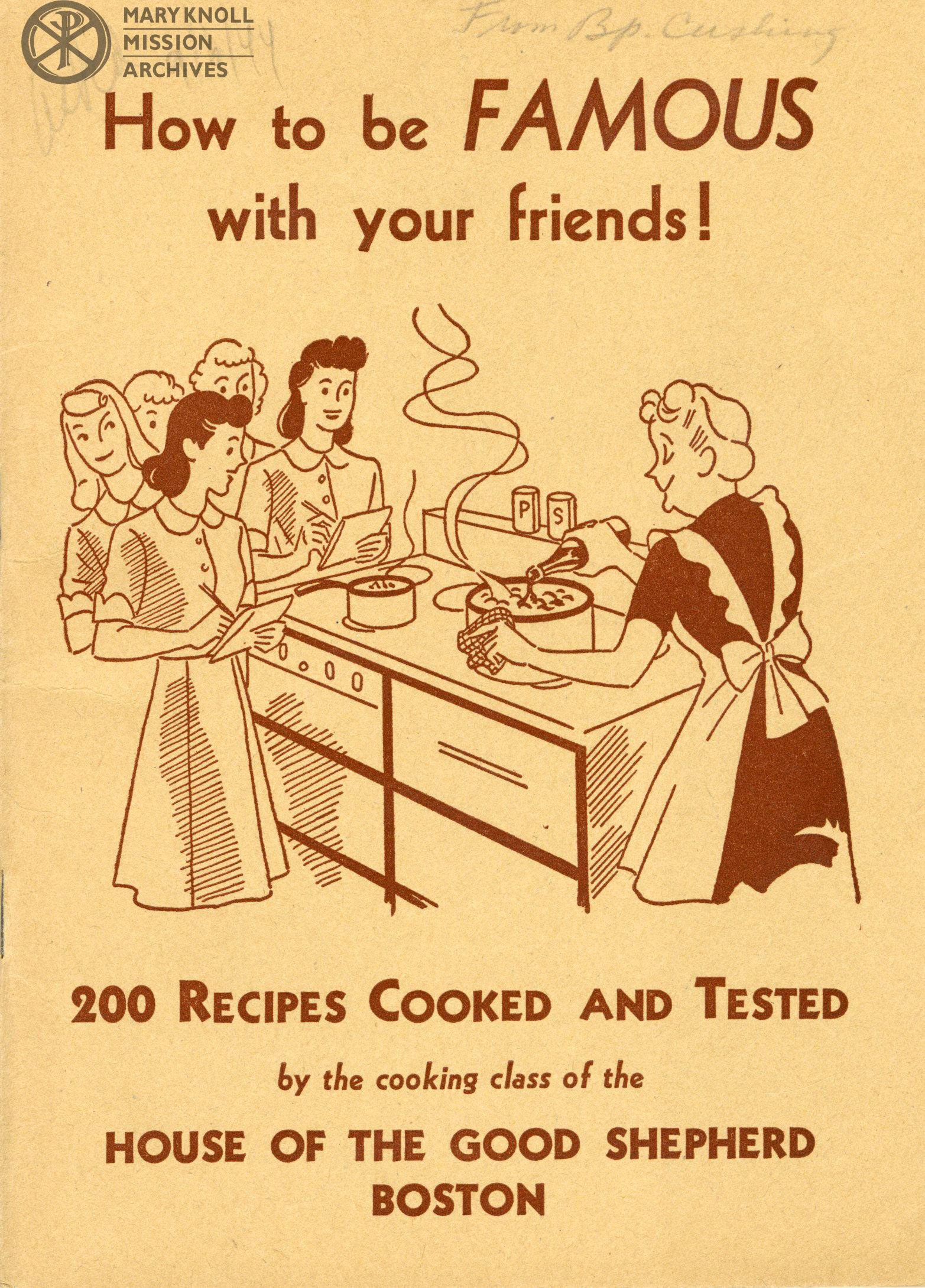
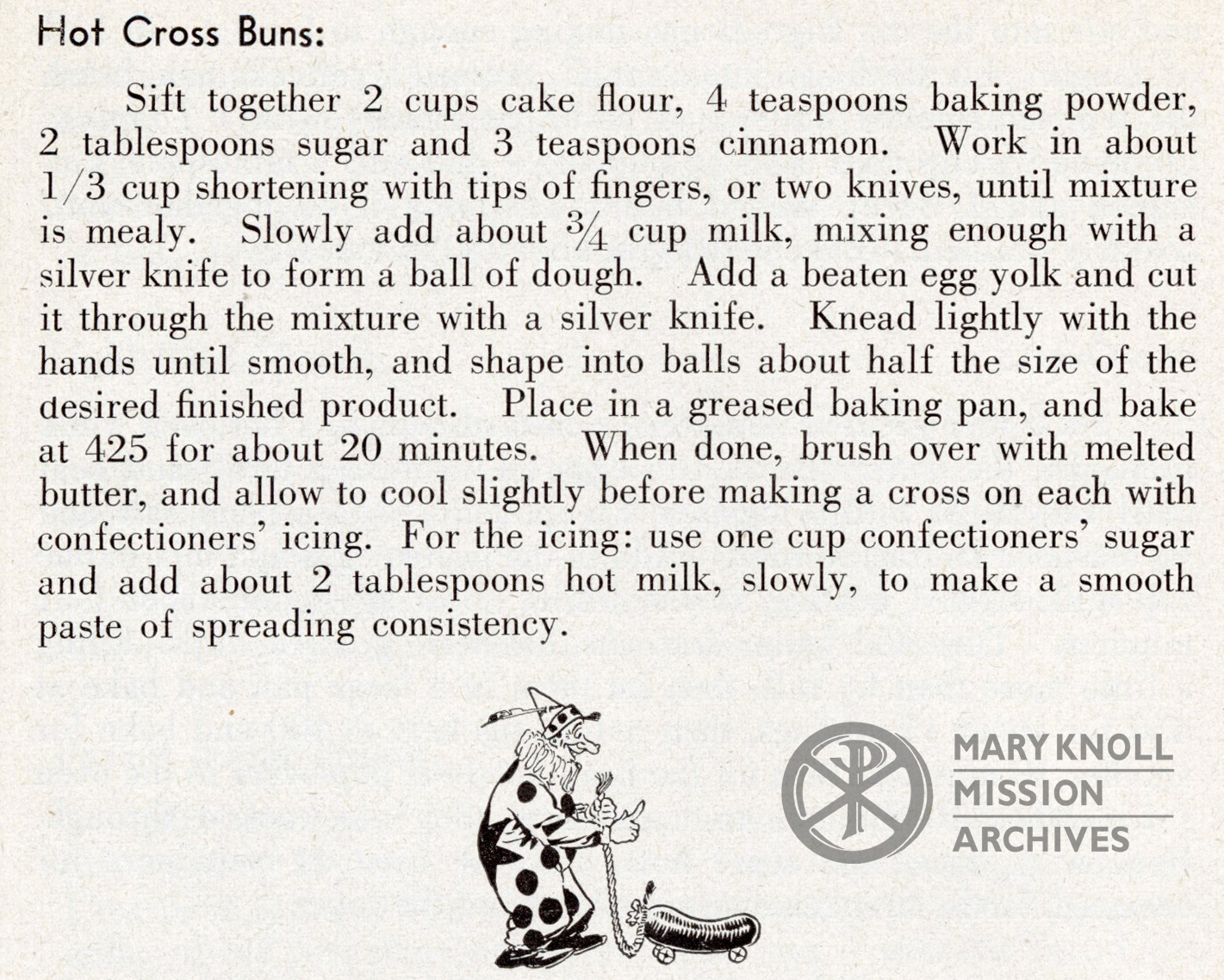
In MMJ’s personal collection, there are a few folders of assorted cookbooks and recipes that MMJ used throughout her life. Amongst this collection is a booklet of 200 recipes produced by the House of the Good Shepherd in Boston. The booklet contains a couple Hot Cross Bun recipes, but I chose the following one due to how easy it is to make.
What Did I Think?
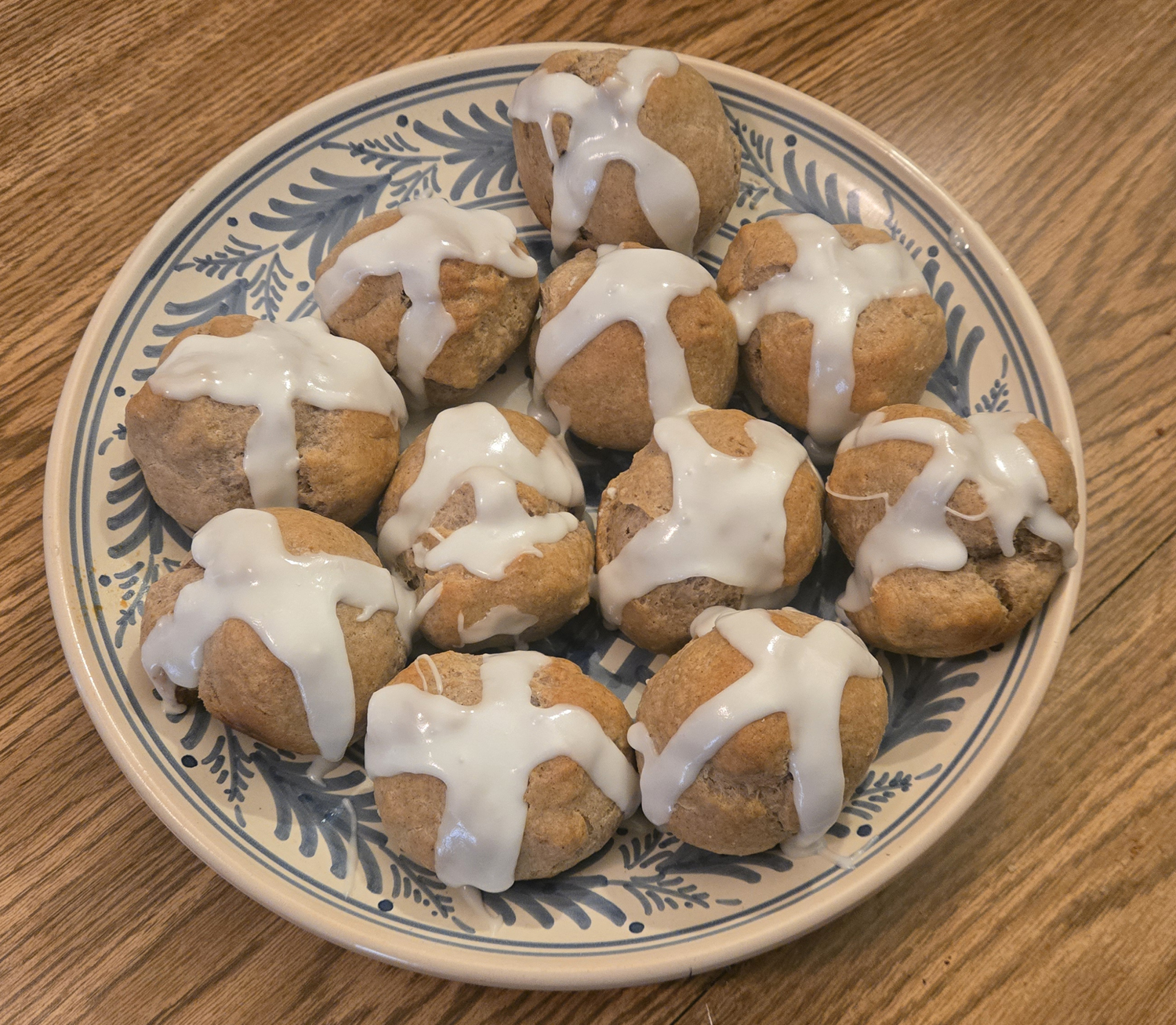
As one can expect, these spiced rolls with icing are delicious! The cinnamon adds just enough flavor to be present without being overpowering. The rolls were rather easy to make, and required no rising. This does mean the bun was not quite as soft as you could expect, but it was still quite good! My icing was a bit loose, so my crosses were a bit messier then professionally made versions.
Chef’s Corner
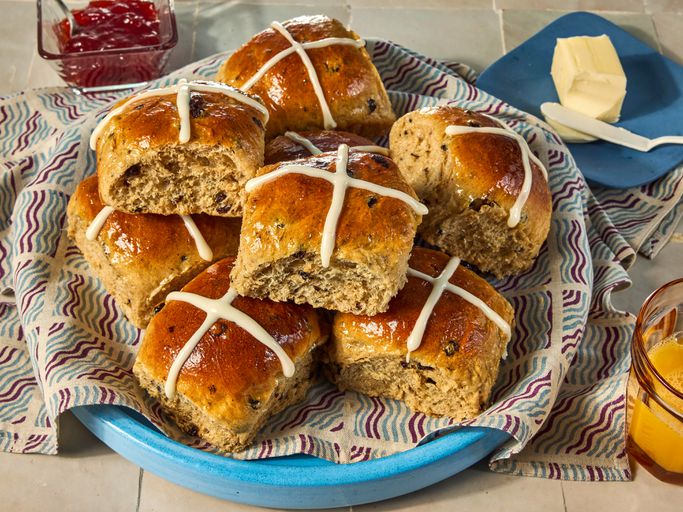
What I find interesting about Hot Cross Buns is the variety in methods and styles. Based on my research, the only real requirement for a Hot Cross Bun is the iconic cross shape on top. I have seen recipes with and without fruit, and with a variety of different spices, flavoring, and types of dough. Even the cross can be different, with some recipes having icing, while others feature two strips of pastry. For this recipe, I have a few notes if you want to give it a try.
Most recipes for Hot Cross Buns feature dried fruit, which is absent here. I didn’t mind that so much, as the cinnamon gives a more unique character compared to standard recipes. That said, it would be relatively easy to add your fruit of choice to this recipe. I would suggest adding it before the milk so it will be thoroughly integrated into the buns.
As for baking, the rolls do double in size, but mostly they get taller rather than wider. Usually Hot Cross Buns are like Parker Rolls, baked together and pulled apart. When you bake this recipe, make sure the dough balls are about a 1/4 inch apart, and they should bake into each other like normal.
Lastly, getting the right consistency with the icing can be difficult. The recipe calls for 2 tablespoons of milk, but you will most likely not need it all. The icing should be relatively stiff, so you can get a clean cross on top. When making the icing, very slowly add the milk to the powdered sugar and be careful not to make it too loose.

Happy Easter Holiday!
Thank you for joining me in this Good Friday edition of Into the Kitchen with MMJ! I hope you were intrigued by these recipes and give them a try for yourself. In particular, I love the amount of customization that is inherent with Hot Cross Buns. That is all for now, and I will see you in the next edition!