
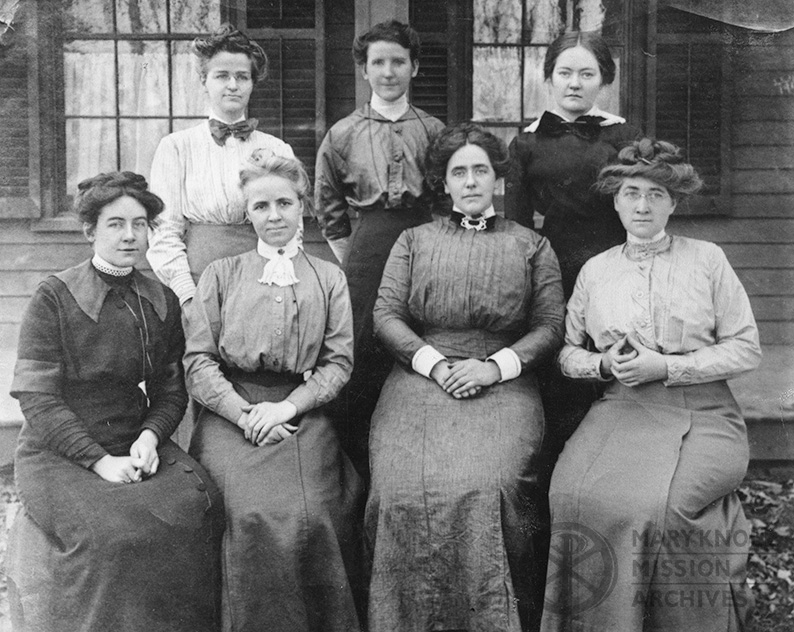
The Maryknoll Sisters’ diaries are a treasure-trove for researchers. Diaries offer a unique window into the individual lives and surrounding communities documented in their pages. We get to read about how people dressed, what they ate, what types of work they did, etc. While we’ve discussed the lives of Maryknoll Sisters in depth throughout our blog, I found myself interested in a new aspect of their lives. Did Sisters use home remedies to combat their illnesses?
Searching through the Motherhouse diaries, I found some interesting examples of herbal remedies employed by the early Sisters. I was pleasantly surprised to discover I already knew a couple of these remedies, but most of them I had never encountered before. A lot has changed in 100+ years!
It’s important to note that this article is not intended as medical advice, and should not be used as such. Please seek medical advice from doctors, nurses, and other appropriately certified or accredited medical personnel before making decisions about your health. While the Maryknoll Sisters used herbal remedies and prayers to soothe their initial symptoms, they also relied on trained medical professionals. In the diary entries below, a doctor was consulted within 24-48 hours if a patient’s symptoms did not improve. Many doctors, such as Dr. Paluel J. Flagg, Dr. C. C. Sweet, Dr. Edwin H. Huntington of Ossining, and Dr. Frederick Gould of New York City, make frequent appearances throughout the Sisters’ diaries.
Water from Lourdes Grotto, Massabielle, France
This special gift first appears in the Sisters’ diaries on April 1, 1912. It was given to Mary Louise Wholean by Fr. James A. Walsh while she recovered from a difficult surgery. Since 1858, the water has been sited as a source of miraculous healings for those who drink or bathe in it. Catholic pilgrimages to Lourdes Grotto continue year-round and the spring water is free for everyone.
While it’s easy now to ship Lourdes Grotto water internationally, this was not an option in 1912. Fr. Walsh had to travel to Massabielle, France and back to share it with Mary Louise. We’ll never know if it directly aided her recovery, but the gift of love and personal sacrifice made by Fr. Walsh must have warmed her heart.

Bottle of water from Lourdes, France, collected in 1928.
Photo courtesy of Science Museum Group Studio, CC BY-SA 4.0,
https://commons.wikimedia.org/w/index.php?curid=128715509

Trifolium pratense, more commonly known as red clover.
Photo courtesy of Ivar Leidus, CC BY-SA 4.0,
https://commons.wikimedia.org/w/index.php?curid=50438310
Red Clover
A diary entry from November 26, 1912 notes that a Brother was sent to the grocery store to purchase cloves. Instead of cloves, he accidentally brought back a “package marked, “Red Clover, a remedy for scrofulous diseases and whooping cough”. Thankfully, the mistake was noticed before it ended up in the evening meal.
What exactly is a “scrofulous disease”?
Scrofula is a type of tuberculosis that primarily affects lymph nodes in the neck. The infection causes swelling in the lymph nodes which can develop into firm masses. If left untreated, it will continue to spread to other lymph nodes throughout the body, causing additional swelling as it infects new areas.
Red clover brewed into a tea can warm and soothe the throat; however, research suggests it cannot cure cancer or tuberculosis. Interestingly, research has discovered that it may help reduce the frequency of hot flashes during menopause (Ghazanfarpour).
Castor oil
An entry from April 4, 1914 mentions a sick lamb being given castor oil, however, the treatment was not effective.
What is castor oil, and how would it have helped?
Castor oil is a vegetable oil produced from castor beans. Like most vegetable oils, it’s a light-yellow liquid that’s mostly tasteless and odorless. While it has many potential uses, it has been used for thousands of years medicinally as a laxative.
Modern medical professionals strongly recommend against using castor oil as a laxative, however. A little goes a long way with castor oil, and it’s very easy to overdose and create a serious medical emergency! There are much safer and more readily available options, such as natural diuretics (eg. coffee, tea) and over-the-counter medicines, to reach for first. If these don’t solve the problem, then it’s time to call the doctor.

Bottle of vintage castor oil,
Photo courtesy of Pete Markham, CC BY-SA 2.0,
https://commons.wikimedia.org/w/index.php?curid=9431579

Sambucus berries, better known as elderberries,
Photo courtesy of Edal Anton Lefterov, CC BY-SA 3.0, https://commons.wikimedia.org/w/index.php?curid=25451700
Elderberry Concoction
January 21, 1919: A “concotion [sic] of elderberry” was given to Sisters suffering from the flu.
What would have gone into this concoction, and how would it have helped soothe flu symptoms?
Most recipes I could find suggested the mysterious “concoction” was actually a syrup. A blend of elderberries, cloves, ginger, honey, and water would be simmered into a natural cough syrup, relieving dry, painful throats and helping Sisters get much needed rest. The flavor profile suggests this homemade recipe tasted much better than our modern store-bought cough syrups as well.
Magnesia & Bicarbonate of Soda
March 3, 1919: “…Sister James had mistaken a glassful of oxalic acid for water and had drunk it. She was given an antidote immediately – some magnesia and bi-carbonate of soda, and soon felt alright again.”
The situation was clearly bad… but just how bad was it?
When isolated, oxalic acid appears as a white crystalline solid, similar to salt. It forms a colorless solution when dissolved in water, which is how Sr. James accidentally consumed it. Oxalic acid occurs naturally in many edible plants, such as spinach, broccoli, and cabbage, but it becomes a health hazard when consumed on its own. It was commonly used for cleaning, bleaching, and rust-removal!
Thanks to another Sister’s knowledge and swift action, Sr. James was given a homemade antidote. She most likely drank a liquid magnesia, better known as “milk of magnesia”, and baking soda to neutralize the acid she consumed. It’s incredible to think two common household items may have saved her life!
Most of us are not as chemistry-savvy as our Maryknoll Sister here. If you believe someone has consumed any type of poison, please contact Poison Control immediately at 1-800-222-1222. It’s free to call and could save someone’s life.

Vintage Milk of Magnesia bottle
Photo courtesy of Nosferattus, CC0,
https://commons.wikimedia.org/w/index.php?curid=117027527
Salt Water
On April 26, 1919, “Mother Mary Joseph sent word that all the Sisters were to gargle their throats with salt and water, to prevent the spread of the sore throat epidemic.”
A salt water gargle is a tried-and-true method for reducing swelling and inflammation in sore throats. The salt helps dry out the affected area, offering relief to the sufferer. It’s not pleasant to taste, but it gets the job done admirably. Would it have stopped the spread of sickness among the Sisters though?
The scientific jury is still out on that one. Some sources state that salt would create a barrier, stopping harmful pathogens from getting into your system. Other sources suggest this might not be enough to prevent illness, especially if you’re living in close proximity to other sick people. Unfortunately for many of the Sisters, their illness continued to be documented over the following days as the disease spread, eventually subsiding during May.
Interested in learning more about Maryknoll?
You can contact the Archives at:
Maryknoll Mission Archives
PO Box 305, Maryknoll, New York 10545
Phone: 914-941-7636
Office hours: 8:30 am-4:00 pm Monday-Friday
Email: archives@maryknoll.org
Website: www.maryknollmissionarchives.org
References:
Bishop James A. Walsh. Maryknoll Mission Archives. (2019, July 25). https://maryknollmissionarchives.org/bishop-james-a-walsh/
Cairns, M. (2024, April 3). The origins of Maryknoll’s medical missions: Dr. Paluel J. Flagg. Maryknoll Mission Archives. https://maryknollmissionarchives.org/the-origins-of-maryknolls-medical-missions-dr-paluel-j-flagg/
Ghazanfarpour, M., Sadeghi, R., Latifnejad Roudsari, R., Khorsand, I., Khadivzadeh, T., & Muoio, B. (2015, October 15). Red Clover for treatment of hot flashes and menopausal symptoms: A systematic review and meta-analysis: Journal of obstetrics and gynaecology: Vol 36 , no 3 – get access. Taylor & Francis Online. https://www.tandfonline.com/doi/full/10.3109/01443615.2015.1049249
Home. Maryknoll Sisters. (2025, May 23). https://www.maryknollsisters.org/
Maryknoll Sisters Institute. Maryknoll Sisters Institute for One Earth Community. (2026, February 11). https://www.maryknollsisters.org/one-earth-community-institute/
Mission diaries, 1912-1968. Maryknoll Mission Archives. (2026). https://maryknollmissionarchives.libraryhost.com/index.php?p=collections%2Fcontrolcard&id=4&q=diaries
Missionaries of the Catholic Church: Maryknoll Fathers & Brothers. Maryknoll Society. (2025, December 9). https://maryknollsociety.org/
National Capital Poison Center. (2026). Get help online or by phone. Poison Control. https://www.poison.org/
Sister Mary Louise Wholean, MM. Maryknoll Mission Archives. (2014, April 28). https://maryknollmissionarchives.org/deceased-sisters/sister-mary-louise-wholean-mm/
U.S. National Library of Medicine. (2024, November 10). Scrofula. MedlinePlus. https://medlineplus.gov/ency/article/001354.htm#:~:text=Scrofula%20is%20most%20often%20caused,lymph%20nodes%20in%20the%20neck.
White, A. (2024, July 26). Salt Water Gargle. Healthline. https://www.healthline.com/health/salt-water-gargle
Wholean, M. L. (2020). The Teresian Diaries 1912-1916 (C. LaVerdiere, Ed.).
Wikimedia Foundation. (2026, February 4). Castor oil. Wikipedia. https://en.wikipedia.org/wiki/Castor_oil
Wikimedia Foundation. (2026, February 6). Magnesium hydroxide. Wikipedia. https://en.wikipedia.org/wiki/Magnesium_hydroxide
Wikimedia Foundation. (2026, February 8). Oxalic acid. Wikipedia. https://en.wikipedia.org/wiki/Oxalic_acid
Wikimedia Foundation. (2026, February 9). Lourdes Water. Wikipedia. https://en.wikipedia.org/wiki/Lourdes_water#:~:text=Lourdes%20water%20is%20water%20which%20flows%20from,Lady%20of%20Lourdes%20on%2025%20February%201858.
Wikimedia Foundation. (2026b, February 17). Trifolium pratense. Wikipedia. https://en.wikipedia.org/wiki/Trifolium_pratense
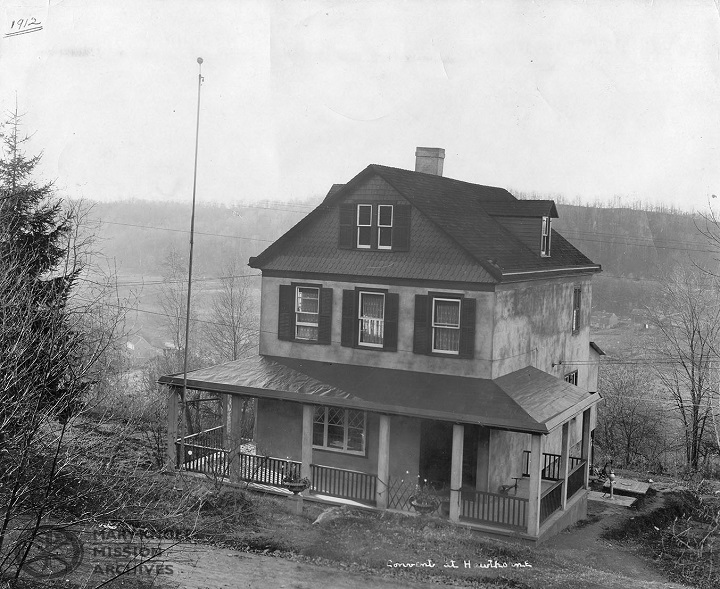
First home of the Maryknoll Sisters, Hawthorne, NY
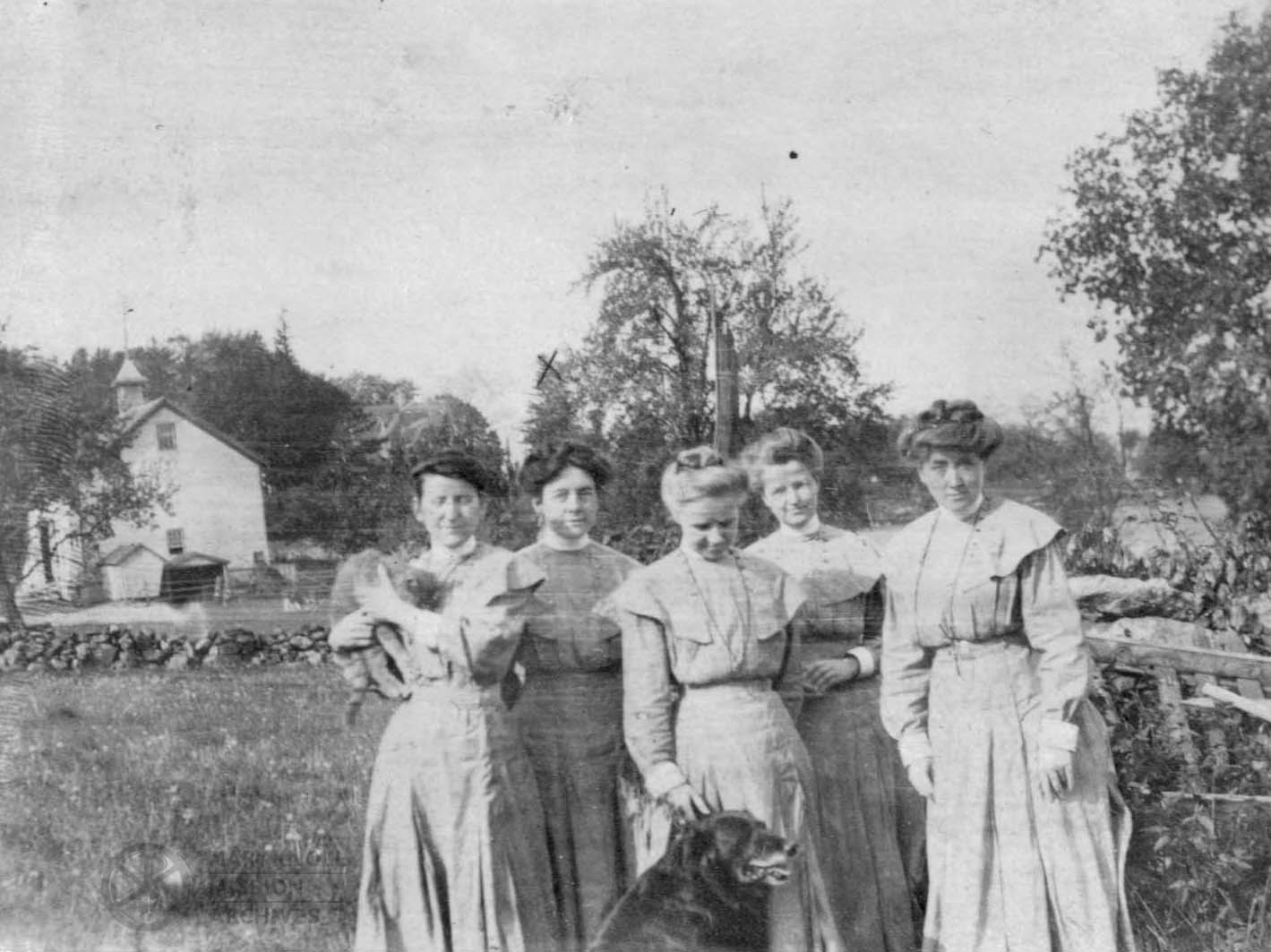
Five Maryknoll Secretaries with their cat and dog, May 1913

The Teresians’ first residence, St. Teresa’s, 1912
